December 7 — Lest we forget

I awoke early this morning – the clock read 7:00.

A few minutes later, I was drinking coffee as I relished the fact that I had no plans for the day. I thought happily that I could be as lazy as I wished on this chilly, grey morning in Arkansas.

However, when I realized that today was December 7 and remembered the impact that day had on my father, my family, the citizens of the United States and the world community, I reassessed my plans.

By then, it was nearly 7:55 a.m. and I realized that was the time, in Hawaii 84 years ago, that the first wave of Japanese bombers reached Pearl Harbor. A second wave of bombers arrived at 8:50 that morning, and those 350-plus enemy aircraft resulted in the loss of 2,403 American lives and the destruction of the USS Arizona in the harbor. Five of eight battleships, three destroyers, and seven other ships in the area were either sunk or “rendered  useless,” and more than 200 aircraft were destroyed. Three American aircraft carriers, however, were at sea and survived the attack. More than 1,100 military and civilian injuries were reported, and approximately 100 civilians also died or suffered severe injuries.

It was a Sunday, just as today.

Less than 24 hours later, President Franklin D. Roosevelt addressed a joint session of Congress.

 “Yesterday, December 7, 1941,” he began, “— a date which will live in infamy — the United States of America was suddenly and deliberately attacked by naval and air forces of the Empire of Japan.”

The Senate unanimously approved a resolution recognizing that a “state of war” existed between the United States and Japan. The House of Representatives also approved the resolution with a single dissenting vote.

Three days later, Germany and Italy declared war against the U.S.  World War II was officially underway, and during the succeeding three and a half years, more than 400,000 American servicemen were killed or later died from injuries suffered on battlefields across the globe.

My father and two uncles served in distant lands during those years; they all returned from the war changed by their experiences but alive.

I have written about December 7 in the past.

This morning, I reread those past remembrances.

I include just a portion of each one here, “lest I forget.” 

The first, posted on my blog, Right Off Main, in early December 2020, is not about Pearl Harbor, but about the pandemic which had just been declared by the World Health Organization. It seems pertinent, in more ways than one:  

I wrote then:

“If there is any good lesson to be learned from a pandemic, it is simply this:

Life goes on.”

. . .

“It is confirmation, come crashing into our consciousness, that — as my grandmother might have said — “We’re not so smart, after all!”

But, life goes on.

That was confirmed in another way, quite unexpectedly, earlier this year (in 2020). I received a friend request through Facebook, from a person I did not know. I am leery of accepting new friends, preferring only a small circle of social media acquaintances. But, I was intrigued when I went to her home page and recognized the family name of some of my forebears among her friends.

Yes, you guessed it; I pushed the accept button.

Then I received a personal message — from Norway — from a person whose name I had never heard, living in a place I did not know from family records. She sent a photocopy of a letter written some 72 years ago by my grandmother in Montana to her cousin in Norway. And that letter brought tears to my eyes.

The long-ago correspondence proved, once again, that across the ages, through good times and bad, life does indeed go on. People go about their business, raise families, worry about the future, and hold on to hopes, dreams and memories of the past.

I’ll share just a snippet of that letter, written December 6, 1948: 

My dear Cousin Kari,

Oh, how many times I have thought of you and asked God to bless you! I hope you are well and happy. We are especially happy the last two years since all our boys are back from Europe, Panama, and China & India after the war closed. Glenn was the last one to come [home] July 2, 1946. They all came home without any scar or hurt but they had seen and mentally suffered a lot. Glenn was in India & China and he was as poor as a stick when he returned. Clifford was with the 8th Air Force in England and Lloyd with the Navy on a mine sweeper in Panama. I pray God will save us from having to fight the world again — but I have two little grandsons so I fear they will come in for a world fight when they reach the age.”

                *Note: Both of those grandsons went on to serve during the Vietnam era, one in the Coast Guard and the other in the Air Force.

This second excerpt was first posted on December 7, 2015. Today, 10 years later, it still seems pertinent.

“Somewhere in the middle of the Pacific seventy-four years ago, a ship received a radio message to alter its course. The captain of the vessel complied.

That vessel and its “cargo” of American servicemen steamed into a port on the West Coast of the United States some days later and found a world very different from the one they had left just a few days earlier. It was a world at war.

Among those troops was my father.

A little more than two years later, he was at an airbase in England, fighting on another front. And he was not to return to the shores of this country until battles on both sides of the world were over.

Lucky for me.

Had that ship in 1941 sailed a few days earlier, made better time, or perhaps been closer to the Philippines (its intended destination), on December 7, 1941, the man who was to become my father might not have returned at all. Through a twist of fate, he and the others on board that lone grey ship were saved the fate of so many others on that day.

My father was born into a world at war. He served in World War II. Then in Korea. And then, because his chosen career was as a military man, he was still in service during Vietnam, although he was not called to that conflict. His skills were needed in other parts of the world.”

My father subsequently spent nearly five years, still on active Army duty, attached to the U.S. Embassy in Paris, France before his retirement

A third post about Pearl Harbor Day seems no less poignant.  I posted the following on my blog three years ago on December 7:

                “On a whim, as I thought about the events of Pearl Harbor those many years ago, I checked to see what else had occurred in history on December 7. It was on this date, also in 1941, that Adolf Hitler authorized the secretive “Night and Fog” campaign, aimed to arrest and execute citizens in territories occupied by Nazi Germany.

I was more than surprised to learn that, on December 7, 1917, the U.S. Congress approved a resolution which led to a declaration of war against the Austro-Hungarian Empire. The Senate later approved the resolution 74-0, and the U.S. was officially a player in the “war to end all wars.” That’s a date in history I was never required to memorize in school.

It was also on this date — in 1972 — when NASA launched the last manned flight to the moon, carrying a crew of three — Command Module Pilot Ronald Evans, Lunar Module Pilot Harrison Schmitt, and Commander Eugene Cernan. Schmitt and Cernan landed on the surface on December 11. The crew returned safely to earth December 19, with Schmitt and Cernan still the last human beings to have walked on the moon. That’s an event I cannot forget, although that mission was 50 years ago!”

. . .

“Several years ago, I was privileged to attend a ceremony at the small Veterans Memorial Plaza in Burleson, Texas. It was a moving tribute to those who served in World War II. The speaker was Don Graves, then a 93-year-old Marine Corps veteran who fought at the Battle of Iwo Jima, and was present at the ceremonial flag-raising on Mount Surabachi.

He was lucky. He survived. He noted that he would never forget the words of President Franklin Roosevelt the day following the bombing of Pearl Harbor. He was 16 at the time. He could not enlist for another six months, until he turned 17. “We were just kids,” he said, adding that he and his buddies signed up to fight for their country without thinking of the future or the consequences. “It was just the way we were brought up,” he said.

Now, that’s something to think about, isn’t it?”
Posted in Uncategorized | Leave a comment

They Paid with Their Lives

Freedom Wall Recalls a Dark Time

If you lived through the Vietnam Era, or if you had a relative in service during that time, you no doubt know that thousands of Americans gave their lives or were injured during the 10-year span of American participation in that conflict. Others returned home from their time in service and were treated with contempt by the public. They were combatants in an unpopular war. There were few welcoming parades when veterans returned home, and too many veterans faced long and painful recoveries, both physical and emotional, from injuries they had sustained. Many still suffer. Few returned totally unscathed.

A Time to Remember

In 1982, the Vietnam Veterans Memorial, a minimalist black granite wall inscribed with the names of more than 58,000 who gave their lives during the extended conflict, was dedicated in Washington, D.C. Sometimes described as a “gash in the landscape,” the memorial stretches for nearly 494 feet in a stylized “V” shape and stands more than 10 feet tall at its highest point.

The number of casualties was not the largest in battles fought by Americans on foreign soil, but it was arguably the most divisive war Americans fought. And its effects are still being felt.

A 360-foot replica of the granite wall in Washington, D.C. will be displayed at Memorial Field at the Hot Springs, Arkansas, Airport, from May 23 through 27, in conjunction with this year’s Memorial Day observance. Known as America’s Tribute Wall, the traveling replica is 80 percent as large as the wall in the U.S. capital. Fabricated of aluminum, with the names inscribed in white, the wall lists the names of all who died in service in that conflict.

Brought to the city by Visit Hot Springs, Hot Springs VFW Post 2278, and Hot Springs American Legion Post 2020, this marks the second time the memorial wall will be displayed here. CEO Steve Arrison of Visit Hot Springs noted that more than 14,000 people viewed the wall during its first visit to the city in 2012.

Multiple traveling replica walls exist. This Tribute Wall radiates from the center with the listings of those who lost their lives listed in chronological order on its two wings. Additional exhibits known as the Cost of Freedom Tribute, memorializing and honoring veterans from World War I through the Gulf Wars and Operation Enduring Freedom, will also be displayed, and other plaques honor first responders and victims of 9/11, and other U.S. military events. The traveling displays are owned and coordinated by a 501(c)3 nonprofit organization, based in Texas, that is committed to honoring American veterans.  

Another group, the Vietnam Veterans Memorial Fund, unveiled a three-quarter replica on Veterans Day in 1996. The display was designed to travel to communities across the country, allowing citizens to experience firsthand the impact of the Vietnam Memorial in the nation’s capital. Since then, that traveling wall, dubbed The Wall That Heals, has visited nearly 800 communities and brought a sense of healing to millions, according to its founders.

In 2024, the exhibit logged nearly 20,000 miles and brought The Wall to 29 communities. The 53-foot trailer used to transport wall panels is accompanied on its journeys by a fleet of veterans and supporters. At each destination, the trailer is transformed into a mobile education center, with a timetable of the Vietnam war and other displays, including the “Wall of Faces,” the group’s ongoing attempt to put a face to every name listed on the wall.

Another organization, The Moving Wall,boasts two replicas of the Vietnam Memorial. Owned and managed by Vietnam Combat Veterans, Ltd. since 1984, these half-size replicas were the first to tour the country. Typically escorted by police and the Patriot Riders on motorcycles, the displays  currently travel the U.S. from May through October, spending about a week at each site. 

What all the traveling exhibits have in common is the number of people who still — after five decades — visit the exhibits, shed tears, make rubbings to preserve the memory of a relative, or simply gaze in awe at the more than 58,000 names etched onto the panels. Many visitors simply stand in silence, paying tribute to those who gave their lives.

In 2017, I visited a replica wall in Fort Worth, Texas, even though I had previously seen the memorial in Washington. Once again, I stood in silence, gazing in awe at the wall of names.

A Brief History of Those Times

Although he made no formal declaration of war, President Lyndon Johnson committed 100,000 American troops to fight in Vietnam in late July 1965, followed by another 100,000 in 1966. More than 2,710,000 Americans served in country during the 10 years of American involvement in Southeast Asia.

One of every 10 Americans who served was wounded — more than 304,000 service members. More than 75,000 were or are severely disabled. Again, based on official records, amputations or crippling wounds were 300 percent higher than in World War II. As of April 2024, 1,577 Americans are still missing and unaccounted for from the Vietnam era, 1,237 from Vietnam, 285 in Laos, 48 in Cambodia, and 7 presumed missing in the territorial waters of the People’s Republic of China, according to recent figures. The search for remains continues. It is worth noting that, although the government now confirms the obligation to account for and return the remains of service members killed in action, that has not always been the case. Repatriation efforts were not initiated until the Korean War, fought from 1950-1953, although “dogtags” or Personal Identification Tags were issued to American soldiers beginning with World War I.

The last American units departed Vietnam on March 29, 1973, after a peace settlement was signed in Paris the end of January. It stipulated that all U.S. prisoners would be released, that U.S. forces would withdraw, and that forces in South Vietnam for both sides would be limited in number. It included a call for peaceful unification of the North and the South.

U.S involvement did not end then, however. Few people alive at the time can forget the news coverage of people clinging to helicopters on the tops of buildings during what was termed the fall of Saigon March 29, 1975. However, the government notes that those highly publicized evacuees were nearly all civilians and Vietnamese military.

Fighting continued between the North and the South for at least another month, but no U.S. troops remained in Vietnam.  Finally, on July 2, 1976, the two Vietnams were officially united as the Socialist Republic of Vietnam, with its capital Hanoi in the north. Saigon was renamed Ho Chi Minh City. That was nearly five decades ago.

The End of an Era?

It was evident this year at an annual Vietnam-era Veterans Luncheon held the end of March in my community that the number of living veterans from that era is dwindling. Sponsors of the luncheon acknowledge that before long there may be no living veterans to honor.

The Tribute Wall, however, is a graphic reminder of a time that is still painful for many American families. If you live in an area that hosts a traveling display of the Vietnam Veterans Wall, a visit is a sobering experience, one you will not easily forget.

Visiting the Wall — either the memorial in Washington, D.C., or one of the traveling replicas — is a graphic way to be reminded of the obvious: Freedom is not free. Despite problems faced by nations around the globe and our country’s contemporary issues, the United States is not actively involved in armed conflict anywhere on earth.

It is good to be reminded of the sacrifices made by those Americans who served, were injured, or died during the Vietnam era, and to pray that involvement in a war of that kind never again becomes our reality.

Especially this month, known as Military Appreciation Month. It is fitting that this month we honor all veterans, those who are alive and those who lost their lives while serving their country. If you have a chance, visit a cemetery or a memorial site, visit the Tribute Wall, or pay your respects in another way to honor those who served, and those who are still serving.

Remember these dates:

Armed Forces Day, celebrated annually on the third Saturday of May, was May 17 this year.

Memorial Day 2025 will be observed, as aways, on the last Monday of the month; May 26 this year.

I know that many of those who heeded the call to serve in a faraway land did not do so willingly, but the truth is that two-thirds of those who served in Vietnam were volunteers, compared with the two-thirds who were drafted during World War II.

Hopeful Notes from Those Times

It has now also been a little longer than five decades since John Lennon’s “Imagine” was released. Viewed today as a song of peace and hope, it was born of those more turbulent times, both for Lennon the artist and for citizens of the world.

Today, however, those lyrics might speak to us again in a hopeful way:

“Imagine all the people living life in peace.”

Lennon’s song was released in the U.S. in 1971, viewed as a protest song as well as a peace anthem. It did not make the charts in the U.K. until 1975 when the Vietnam War was essentially over.

“You may say I’m a dreamer
But I’m not the only one
I hope someday you’ll join us
And the world will live as one.”

Its haunting refrain is as appropriate for our age as it was then. Perhaps you’ll be humming it to yourself — if you live near Hot Springs — as you visit that Freedom Wall Exhibit.

 I know I will.

*Note: I lived through this time in American history. I am the daughter of a career Army officer, (a lifelong “Army brat”), and I married an Army officer who completed his military obligation, but did not serve in Vietnam. I have written extensively about military life and history, and visited numerous military cemeteries and memorial sites in this country and abroad. I try to base all my work on factual information and try diligently not to cite misleading statistics. For this piece, I gleaned some information from this site: https://www.uswings.com/about-us-wings/vietnam-wa, and I believe they are accurate. If you take issue with anything I have written, please contact me directly at adriennecohen221@yahoo.com.

Posted in Commentary, History, Memorial Day, Uncategorized | Tagged , , , , , , , , , , | Leave a comment

Are you leaving again?

This is the third in a mini-series of posts about travel, primarily traveling alone in a busy, crowded world, and about what is great and not so great about solo travel, or about traveling in general.

Anyone who knows me well knows that I have spent a lifetime traveling. I delight in telling newfound friends that my first cruise was at the age of nine, aboard a military transport ship. It was by no means a form of luxury travel, but to this day I have fond memories of the small round porthole in our family cabin, and of trying to sleep as the ship pitched through the waves of the north Atlantic. I also have vivid memories of dishes and glassware sliding across the dinner table as the ship rolled in heavy seas one evening. Despite all of that, I was hooked on cruising.

Not long after that, I was on an international flight — in those days, it was not a jet. Between Germany and New York City, there were two refueling stops, the first in Keflavik, Iceland, and the second at Gander, Newfoundland. Although I had flown before, this was definitely a long and, at the time, exciting trip!

As a food and travel writer, I was away from home for a total of 91 nights in 2023. Even for me, that’s a lot of time “on the road.” Note that at least a third of those nights away were aboard cruise ships, and a fair number of days included “road trips,” my second love — born from a childhood spent traveling by car across vast stretches of the western United States.

I do not write fiction. I simply strive to tell the truth about the places I go, the sights I see, the food I consume, and the people I meet. Most of my experiences have been positive. I think it’s all too obvious that I love traveling.

However, I cannot say that I’m never lonely, tired, hungry, or distraught when I travel. Especially when I am by myself on assignment. What I can say is that, no matter what the circumstances, I consider myself fortunate to be traveling at a time when so many options exist to see the world. The people, the places, the tours, the memories that I bring home from every trip — those are the reasons I keep a bag half-packed and am able to leave on short notice. I travel whenever and wherever I have a chance. I have no intention of “retiring,” and it’s my travel experiences that become the “soul” of my writing and lend credence to my words.

Travel keeps a person delightfully off-balance. I have no idea who first expressed that thought, but it’s true. And it’s that “off-balance” perspective, I think, that allows new ideas and perceptions to take hold, flourish, and grow. Traveling puts the world in perspective. It provides a wealth of beginnings with endings yet to be written. That’s what makes each trip distinctive. No, not every one is wonderful, but all are memorable.

What’s it like being constantly on the go? For me, it’s the realization of possibilities. I have to admit that these days I am not always on the go. But I also must say that when I am not traveling, there is invariably another trip on my mind. Planning a trip can be almost as much fun as the trip itself. The next best thing to traveling is thinking about traveling!

I like not knowing what will happen next. I like being surprised, and I like taking unexpected turns along the path of life.

What about you?

Note: If you missed my first two posts in this mini-series, you can read them here: https://rightoffmain.com/2023/11/29/solo-travel-just-go/ and https://rightoffmain.com/2023/12/21/travel-tales-when-plans-go-awry/

Posted in Commentary, Solo Travel, Travel | Tagged , , , | Leave a comment

What a difference a day makes

Had I not watched television news yesterday, talked to residents of my community, or experienced the wind, rain and hail of the previous night, I might have believed that spring is now in full bloom here in Hot Springs Village, Arkansas.

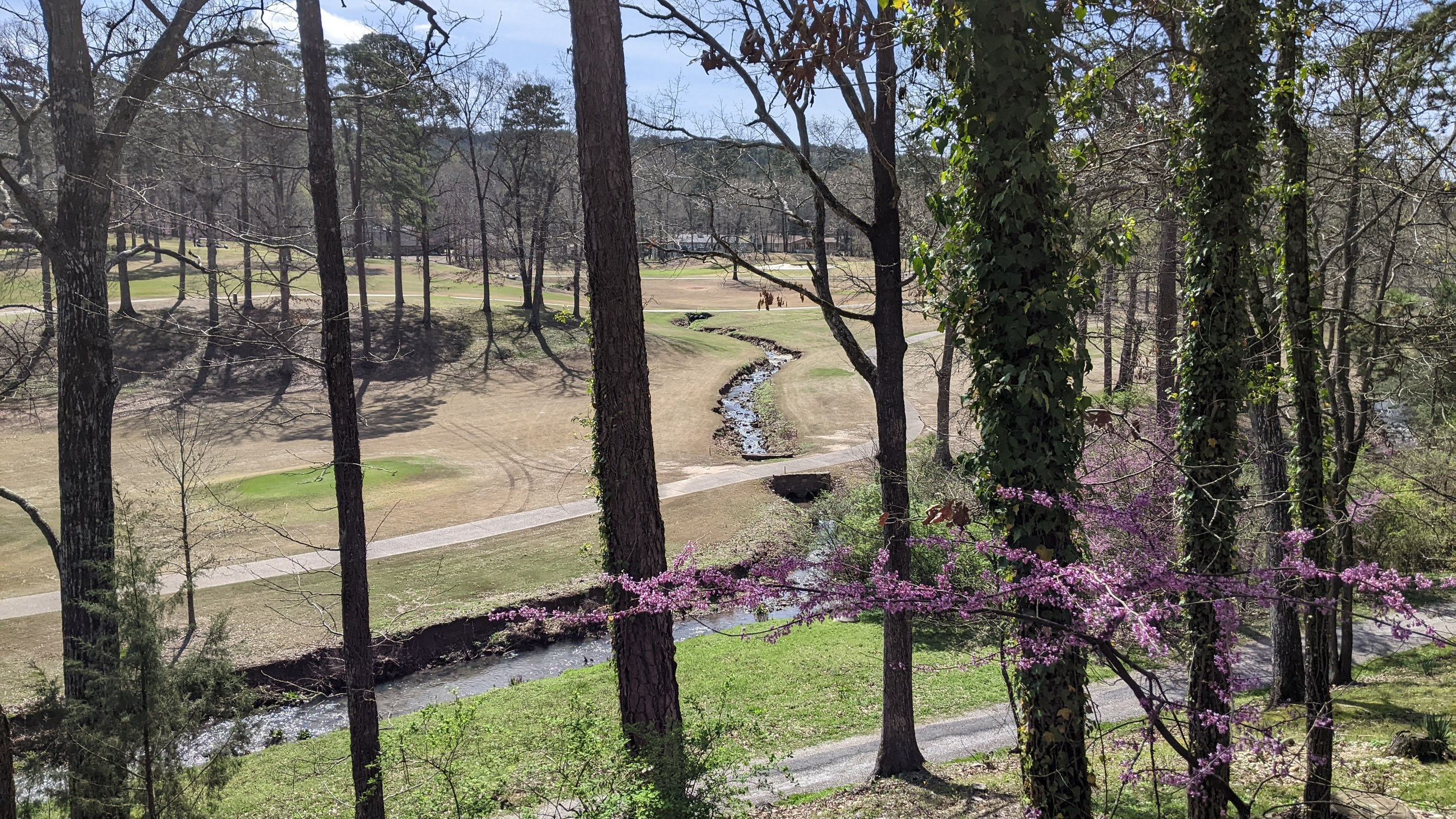
I awoke this morning to fluffy white clouds filling a beautiful blue sky. The temperature is pleasant, the wind is calm, and the birds are singing. There are no golfers on the course, but it’s early. The course, however, still has water ponding in low spots from the drenching rains that visited us. I doubt that many golfers will be out today.

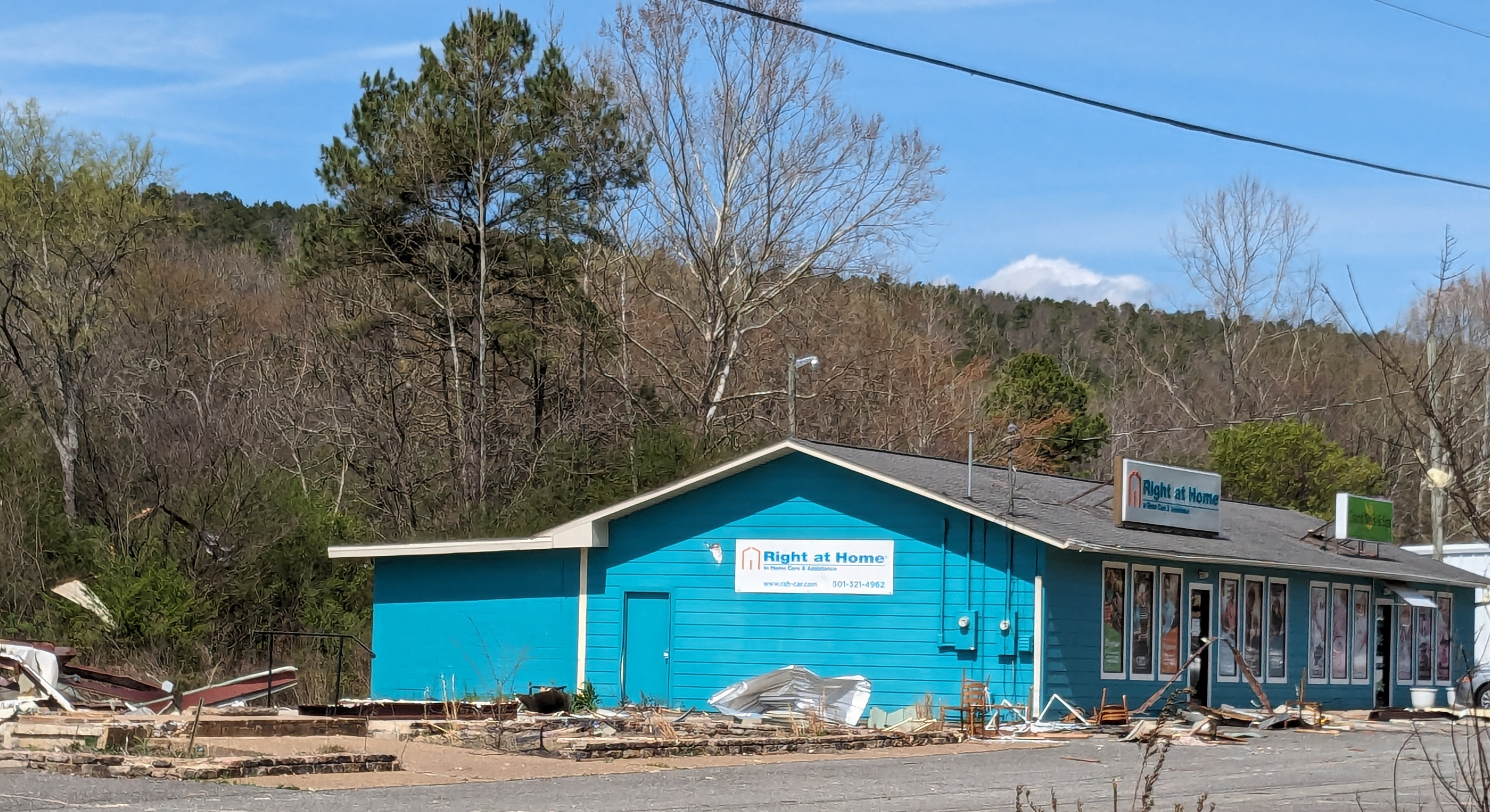
The EF-2 tornado that struck our Village Thursday evening was real, and I cannot forget that. So, today, I ventured out to visit nearby shopping areas and streets and neighborhoods other than my own. I wanted to see for myself the damage caused by the half-mile wide tornado that spent some 20 minutes cutting a path more than eight miles long through this tree-filled gated community.

Outside the gates, life and commerce continue just as normal, except for one horribly twisted shell of a building that was lifted off its foundation and deposited only a few feet away, adjacent to a strip center that was, for the most part, untouched. Today, a handful of people were seen sorting through a debris field almost the size of a city block

The manned main gate allows residents and authorized visitors to enter this community, home to slightly more than 14,000 people. The gates may add to our sense of security in some ways, but they were no deterrent to the wind and hail visited upon Hot Springs Village two nights ago.

It’s hard to believe that nature can be this brutal.

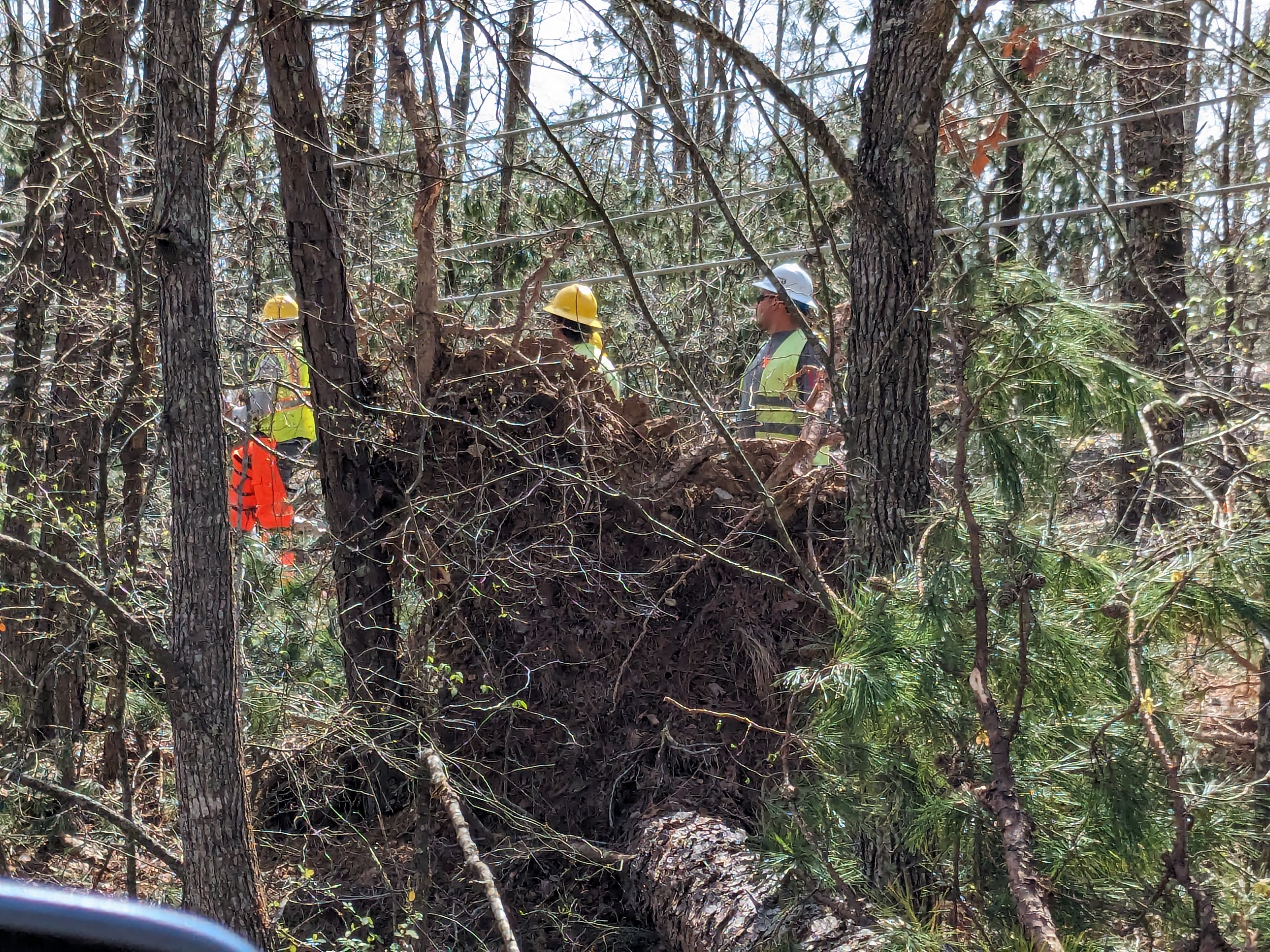
Later today, on my brief drive through the Village, I did my best to keep out of the way of the army of workers helping to clear debris, remove tree limbs from roadways, and restore power. The cleanup effort will continue, perhaps for weeks. Thankfully, there was minimal damage to homes and businesses in the area, and no serious injuries were reported. For that, we are all thankful.

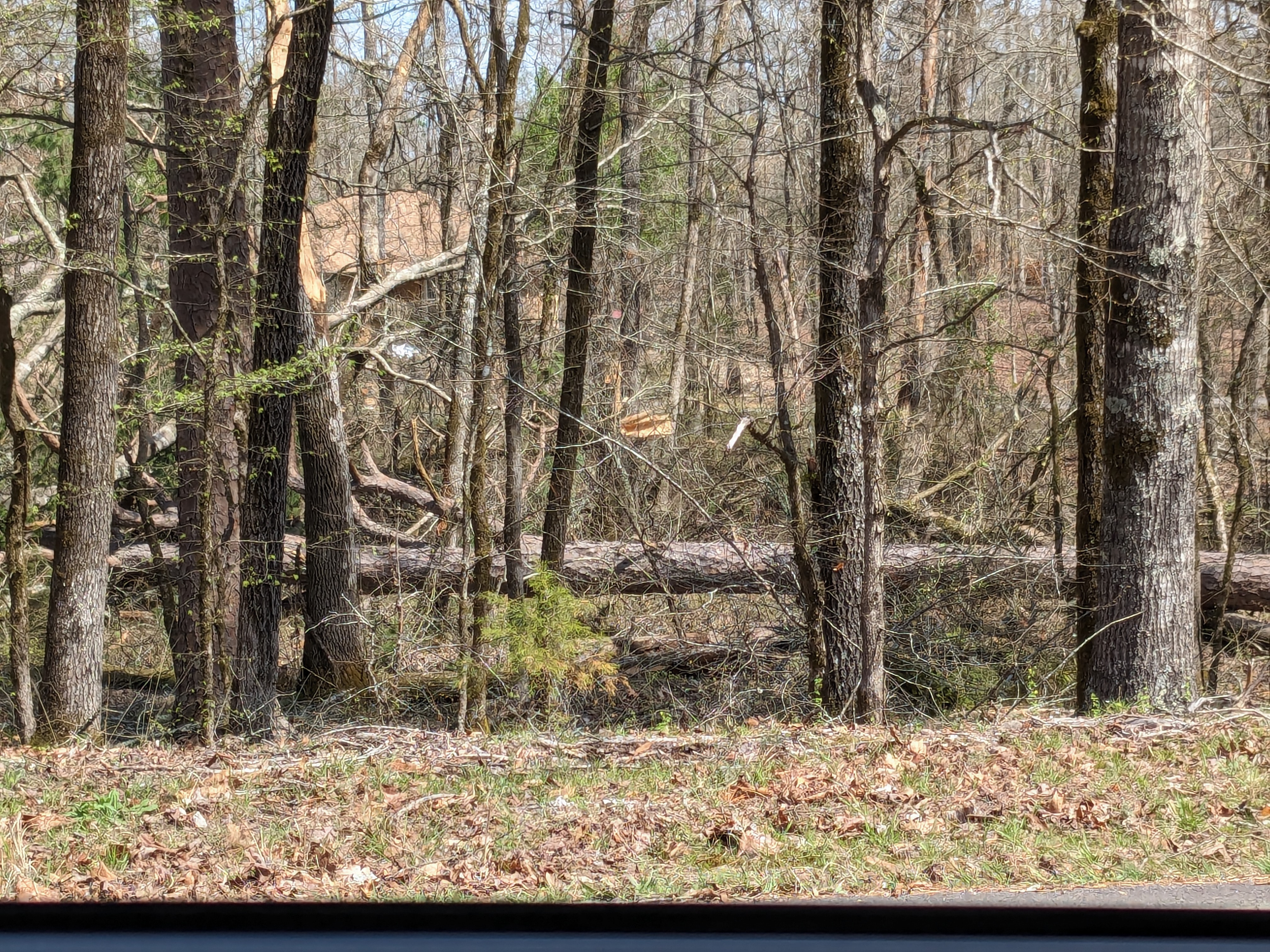
The extent of the damage took my breath away. Once again, I was surprised at just how close these severely damaged pockets in the community are to my home. It was a vivid reminder of the power of nature and how ill-prepared many of us are for this kind of “natural” disaster.

Here are some photos:

It’s hard to believe that a metal building can be transformed into twisted rubble while buildings just next door sustain no visible damage. It’s harder still to understand how a debris field can be deposited virtually in the front yard of a home not far away. But I have now seen up close the damage wrought by the relatively slow-moving tornado that swept through my area. I will not easily forget these images.

Much credit is due the hundreds of utility repair workers, road-clearing crews, tree removal companies, first responders, Village employees, street crews and others who responded to help our community. And residents must be commended for helping neighbors as necessary, and for listening to recommendations to stay off the streets and “out of the way” so that the professionals could get to work. You might also be interested in reading my first account of the storm, posted before we knew the full extent of the damage.

It has been quite an experience, one I hope I will not be required to repeat!

Posted in Uncategorized | Leave a comment

The Storm’s Aftermath

It was a dark and stormy night last night.

March 15, 2024, in Hot Springs Village, Arkansas. This morning is grey and dreary. The creek outside my home is flowing fast, and there are puddles of water in the low spots on my property.

From my balcony, I see no alarming signs of damage from last night’s storm. We are safe and warm. We have electricity and water. There are no downed power poles or uprooted trees in sight. However, some in our Village of approximately 14,000 residents do not yet have power restored and we all are urged to be judicious about water usage until possible damage can be assessed or remedied.

Last night, somewhere around 8:30 p.m., a confirmed tornado, albeit a slow-moving and relatively minor one, moved through our area, formed out of a bank of thunderstorms that was widespread from Ohio to southern Arkansas. News reports point to some severe damage to businesses and commercial buildings on the highways near our gated residential community, but so far, at least, there have been no reported deaths or major injuries. Some neighborhoods reported hail the size of softballs, and we understand that tree limbs and downed power lines dot the landscape. We have heard reports of major damage to some roofs, and at least one home is reported to be almost totally destroyed. Such damage has not been confirmed, and such reports are relatively few.

Pulling Together

This morning, it feels more like “community” here than on most days. But there are no neighbors out walking their dogs, no golfers on the course. Residents have been vigilant about checking on friends and neighbors. At least one church opened its doors last night to shelter anyone without power, and those with home damage. Other groups continue to monitor members and neighbors, offering aid to anyone in need. Multiple e-mail and message chains appeared last night, asking folks to respond simply by saying “okay” or “all is well.” That also provided a way for officials to quickly assess where property damage was most severe, and where power outages existed. Many residents have felt compelled to notify far-flung friends and family about conditions here, thinking that they don’t want relatives to hear about “our tornado” on the national news. Somehow, this morning, the feeling is that we live in the “small-town” America that many of us wish still existed

Area schools opened late this morning after it was determined that school buses could safely complete their routes. But they opened, and life will soon return to its normal cadence for most of us. Local restaurants, shops, and service businesses have done a commendable job of keeping us “in the loop” about closings, cancellations, altered hours of operation, and other essential information. But all are determined to move on from yesterday’s storm.

The Reality

I have never before been so close to a tornado’s touchdown, even though I have lived for many years in areas where tornados are far from unknown. Was it frightening? I don’t know; it was over too quickly. It came with too little warning.

My husband and I don’t have the comfort of a “safe room” in our home; our nearest shelter is a basement storage room accessible only via an exterior pathway. We might not have had enough warning last night to make our way there, but it was not an option to follow a slippery downhill pathway in driving rain while also being pelted by large hail.

I wasn’t ready for that kind of adventure. Instead, my husband and I watched television news reports as the path of the suspected tornado swerved into an area just blocks away from our street. We watched in fascination, awed by the weather team’s ability to pinpoint the exact area where the tornado would (and did) touch down.

Memories of the Past

On my mind was an evening several years ago in a suburb of Fort Worth, Texas. Then, my husband and I huddled in an interior hallway of our home. That was scary because I could “feel” the winds as they hovered around neighborhood trees and rooftops. It was as if the house groaned in the effort to hang on. And then we heard the “freight train” sounds as the worst of the fast-moving storm passed nearby. That was fear — clear and unmistakable.

That particular tornado struck down in the DFW Metroplex some 30-40 miles away! I am not eager to repeat that experience, nor to be witness to that sort of major devastation.

This was different. My husband and I stood looking out at the darkness that surrounded us. It was still and quiet outside last night. A sliding door to our screened porch was open, but except for the sound of raindrops, there was little hint of the approaching storm. We saw the brightly-colored weather maps on television and could not reconcile them with the view outside our window.  

At that moment, there was no thunder, no lightning, no wind noise. There was nothing to cause fear other than the occasional loud bang of a hailstone on the roof and the relentless pleas of the broadcast weatherman to take cover immediately.

We did not react in the prescribed manner. It was not that we didn’t know what we should have done. It was simply that we did not react. The rain continued, heavy at times, far into the night, after the tornado warning was lifted. When we finally went to bed, it was hard to sleep soundly.

Assessing the Storm

This morning, as we listened to a radio interview with Kelly Hale, general manager of the Hot Springs Village Property Owners Association, we realized again how lucky we are. Indeed, we have valid reasons to believe that all the residents of our Village are fortunate. Yes, there is property damage. Yes, tree limbs block at least some of our major thoroughfares within the Village. Yes, some small roads are almost inaccessible. Yes, there are power outages.

But, as was noted on the radio this morning, crews from the power companies are on the job to reset power poles; cleanup is underway, and first responders are visiting homes in our community to check on residents. We feel fortunate, indeed. But we have been instructed to stay home and allow the professional first responders, utility workers, and cleanup crews to do their jobs.

In effect, we have been asked to put aside our curiosity and stay out of the way. I am certain there will be time for volunteer labor in our community, but, for now, it can and should wait until the major repairs and cleanup are finished. I am certain also that we will come together as a community to clean up, fix up and move on, just as other communities have done in the past.

We are at home because we don’t want to escalate the problem. We have seen some pictures posted online of the tree limbs and the debris in our neighborhoods. We will watch the television news reports this afternoon. We will eagerly await the final storm assessment from the authorities. And then, as necessary, we will join with our neighbors to help restore our community.

The Day After 

Now it is late afternoon in Hot Springs Village, Arkansas. The first photos are just now being aired on television showing the damage to our community. Here are the facts:

The National Weather Service has confirmed that it is believed an EF-2 tornado cut a swath through our community last night with a storm track approximately one-half mile wide, with winds of about 115 miles per hour. It is believed that the track on the ground was approximately eight miles long. We will eagerly watch the continuing coverage of the storm that burst into our community unexpectedly last night. I, for one, am eager to get out and see the damage to my community firsthand.

For now, though, I am grateful that it was not worse. 

With much of the world under siege from events so much more terrifying than a spring storm, we count our blessings. We do, however, look forward to seeing sun and blue sky once again!

Posted in Uncategorized | Leave a comment

Travel Tales: When plans go awry

I arrived at Sea-Tac airport after the dinner hour from Fairbanks, Alaska. I had a layover of about three hours, and I was a bit disoriented by an airport that seemed to have more than doubled in size since my last visit. It took two trams, three escalators and what seemed like a mile-long walk with a carry-on and my overstuffed “personal item” to arrive at my continuing flight’s gate in a different terminal. The waiting area was crowded with passengers waiting to board an interim flight.

I walked on, hoping to find a spot to relax and have a bite to eat.

When I spied an inviting airport bistro, I was “all in,” despite a large number of empty tables. I found an open bar stool and asked for a menu, only to be told by a busy server that the kitchen had closed 30 minutes earlier.

Aha! I sighed, understanding the reason for the empty tables.

I ordered a glass of my favorite red wine, only to be told it was sold out. I accepted an alternative. A fellow traveler arrived to occupy the stool next to me, and he also asked about food. Then he ordered as well, settling on his third choice of a draft ale!

We raised our glasses in a mutual toast to safe travels and no dinner, speaking briefly about the irony of being unable to order food or drinks of choice in a place that catered exclusively to travelers. There wasn’t even a “grab and go” food venue in sight on a weekday evening at one of the top dozen international airports in the country. It was not quite 9 p.m.

We were both destined to fly on without dinner, but an hour’s worth of interesting conversation ensued, until it came time to pay our bills. Suffice it to say that my single glass of “acceptable” wine, not including gratuity, cost more than I pay at home for a full bottle of my favorite red. My newfound friend was equally surprised by the price of his two draws from the tap. Shaking our heads, and wishing one another well, we made our way to our gates, eager to board our separate flights, his to the east coast, mine to Dallas.

The point of this story is not that the situation would have been any different had I been traveling with my partner. Together, we would have been equally tired, hungry, and dismayed by the prices. But we would probably have consoled ourselves with laughter, and resolved to never travel again without a nutritious breakfast bar or a package of cheese crackers.

So, I simply reiterate the advice I offer to travelers young and old: Stay flexible, and don’t forget to pack your sense of humor! But now, I will routinely tuck a snack into my carry-on — a bag of peanut butter M&Ms perhaps, or some salted nuts. And I will most certainly ask the price before ordering anything!

My equally important recommendation: Always talk to strangers! made that Seattle experience bearable. Actually, the ability to talk about our shared frustration helped alleviate the hunger and the time passed quickly. Sharing makes even difficult times bearable. Connecting with another human being always lightens the emotional load.

Two weeks earlier in Dallas, a friend had dropped me at my airline’s curbside check-in counter. I had booked my flight with the airline credit card. One of my expected perks was a no-fee checked bag and I planned to take advantage of it to simplify my passage through security as well as to lighten my load at a layover airport. To my surprise, however, curbside check-in was unavailable for my international flight to Vancouver, B.C., and the “free bag check” only applies to domestic routes. Once inside the terminal, I paid the fee, handed over my bag, made my way through security and on to the departure gate noted on my boarding pass.

I settled into a seat; boarding was scheduled about an hour later. A woman with a distinctly British accent sat next to me. She had arrived from London, and was traveling to Vancouver to visit her daughter. We touched on a variety of other topics, including the coronation of King Charles III, with television coverage beginning shortly after midnight Vancouver time.

“I am not a monarchist,” she said. “Are you?”

I thought about that for a second. “No,” I offered. “I am not a monarchist,” thinking to myself that was a concept Americans gave up on two and a half centuries ago. But I added that I had watched the coverage of Queen Elizabeth’s funeral some months before, and planned on watching some of the coronation coverage as well.

She volunteered that she had no intention of watching the pageantry taking place in her home country, and we spoke at length about the monarchy and its role in the modern world, about life in our respective nations, about Canada, our families, our travels, and our hopes for the future. We didn’t solve any world problems, but we learned we had more similarities than differences and we enjoyed our time together, until we heard a “final boarding” announcement over the public address system.

It was only then that we realized we were among only a handful of passengers waiting at that particular gate, and that there were no airline representatives there.

To our dismay, we checked the adjacent schedule board and discovered we had been waiting at the wrong gate. We grabbed our carry-on bags and totes and made a dash through the concourse, arriving at the proper gate to be greeted with frowns — then smiles — just as the ground crew prepared to close the airline door!

Breathless, we exchanged glances as we made our separate ways to our assigned seats and waved goodbye. Were we so engrossed in conversation that we simply missed the announcement of a gate change? I am still confounded, but I am grateful for that opportunity to connect so deeply with a complete stranger, and I will always remember how quickly the time passed and how intertwined our lives seemed. Sharing a unique moment in time with another person is, to me, the best travel reward that I can imagine.

I am happy that we didn’t miss our flight, although even that might have been worth it! I believe wholeheartedly that the most memorable experiences begin when two strangers smile and say hello.

After a few hours of rest, I awoke in the middle of the night to view the news coverage of the coronation. I wondered if perhaps she had relented after all. Somehow, I hoped she was watching too.

Note: This is the second in a mini-series of posts about solo travel. I plan to continue to write about my solo experiences, as the spirit moves me and with no particular schedule in mind. I do hope though that you’ll come along with me and that you enjoy the world through my eyes. Also, I’d be pleased if you share comments about your experiences in various parts of the world. Click on the Follow button to receive email notification of future posts.

Posted in Commentary, Travel | Tagged , , | Leave a comment

Holiday Spirit: Honoring Veterans

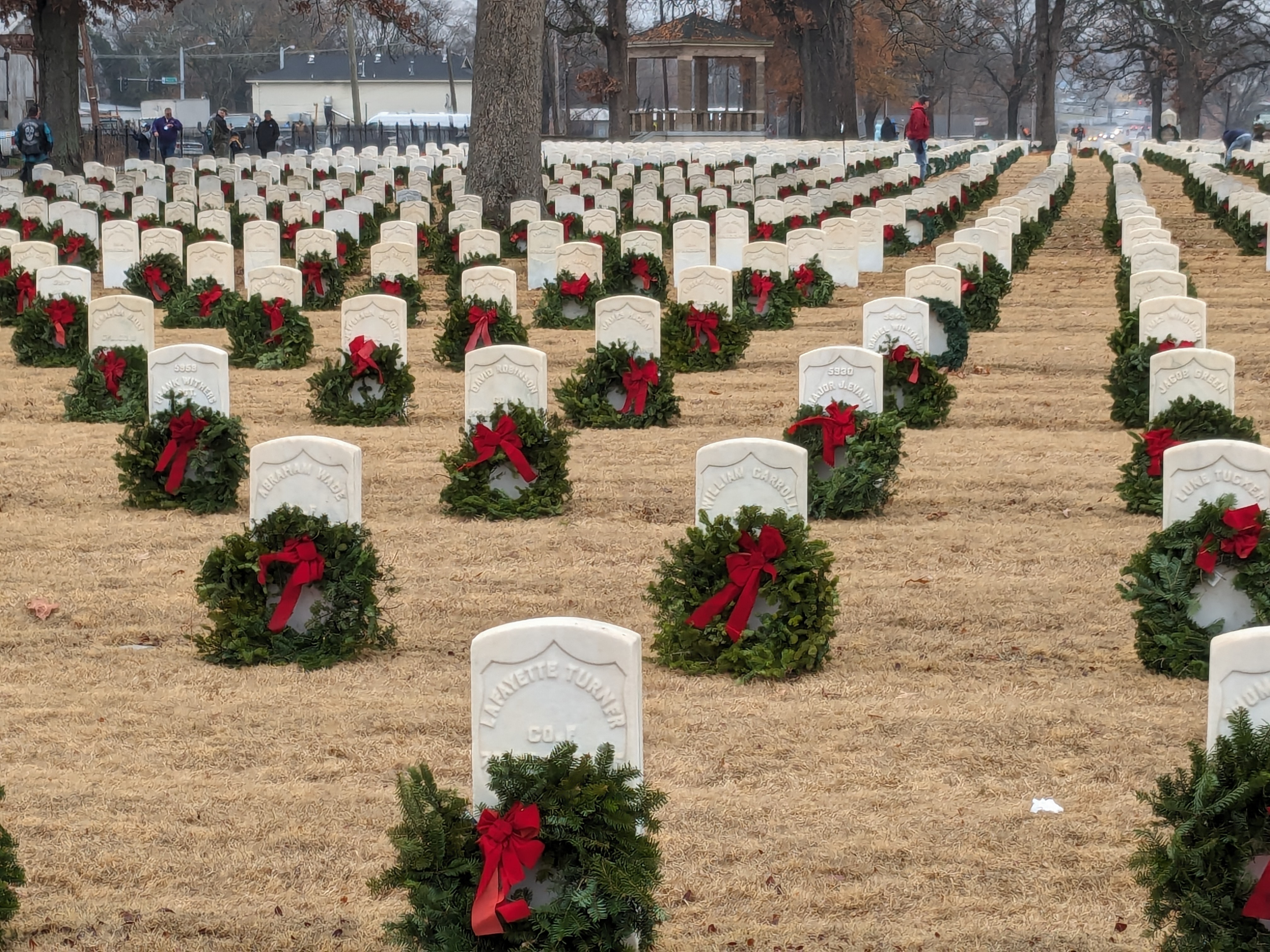
Several hundred volunteers from nearby communities gathered Saturday morning, December 16, to place evergreen wreaths at the headstones of military veterans interred at Little Rock National Cemetery. They joined more than two million volunteers and supporters at more than 4,200 locations in the United States, abroad, and at sea to “remember, honor, and teach” the value of freedom and pay tribute to the service and sacrifice of those who served in the military.

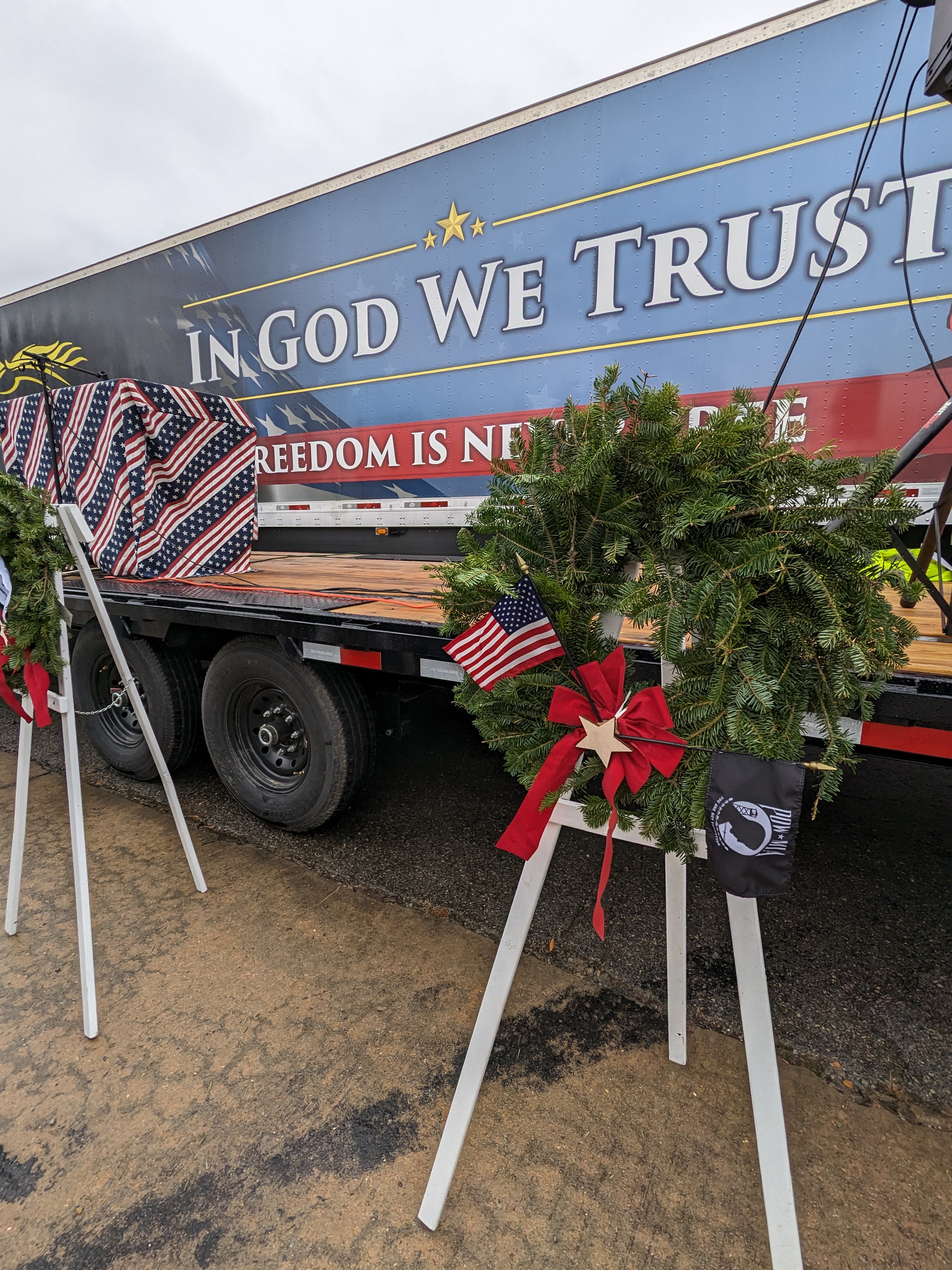
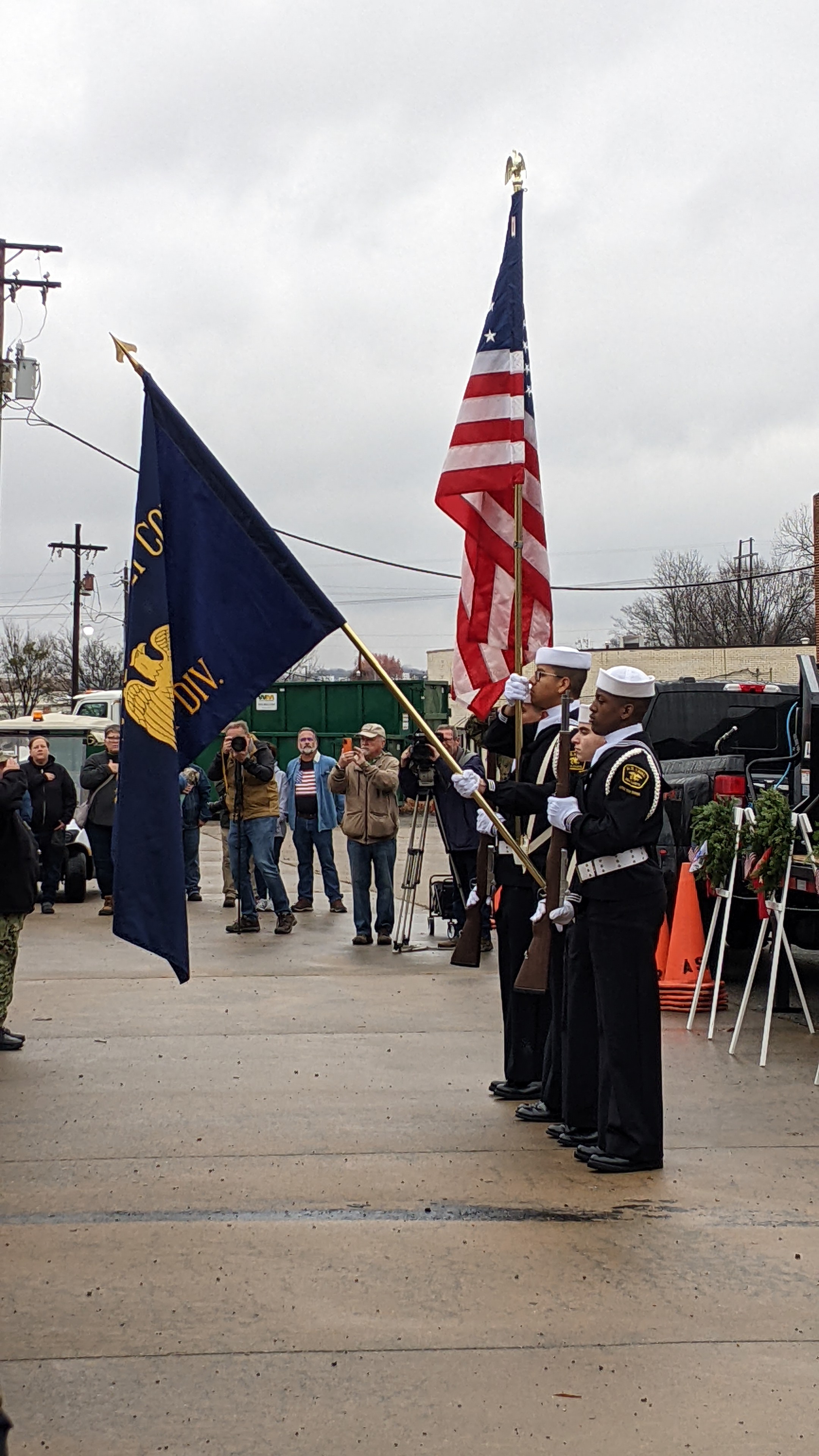
A brief ceremony before the actual wreath distribution recognized sponsors, truck drivers, organizers, and volunteers, with a military honor guard, tribute wreaths for each branch of military service, and a POW/MIA wreath. Scout representatives participated in the ceremony, and several individuals were presented with commemorative metal plaques.

The tradition began in 1992 when Worcester Wreath Company of Columbia Falls, Maine, had a surplus stock of wreaths near the end of the holiday season. The company, with the help of Olympia Snowe, a United States senator from Maine at the time, arranged to transport the wreaths to Arlington National Cemetery. A wreath-laying ceremony was held that year at the Tomb of the Unknown Soldier, and approximately 5,000 wreaths were placed in the oldest section of the national cemetery.

It generated interest from citizens and groups in other states, and the Worcester family later began sending seven wreaths to national cemeteries across the country — one for each branch of service, with an additional one in remembrance of POWs and MIAs. Subsequently, with the support of veterans’ organizations, the family formed a non-profit organization to coordinate the growing requests and facilitate the efforts of numerous volunteers.

The single day in December when the wreaths are placed at the cemeteries culminates a year-round effort that involves more than 5,000 sponsorship groups, corporate contributions, and in-kind donations from the transportation industry. Volunteer drivers transport wreaths throughout the nation. This year, three loaded tractor-trailers delivered more than 17,000 wreaths to the National Cemetery in Little Rock.

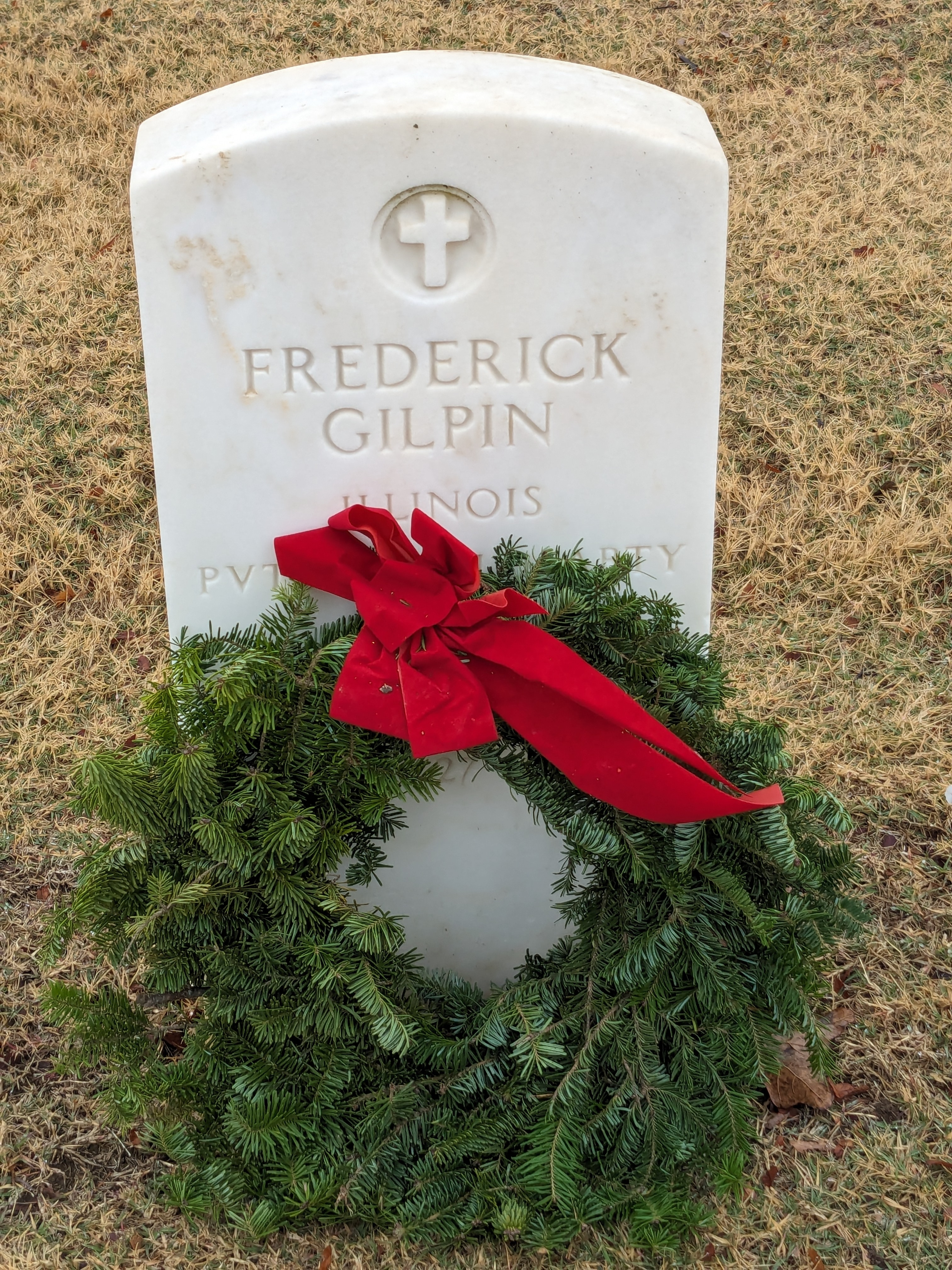
However, even that wasn’t enough to ensure that a wreath was available for the more than 21,000 headstones. Some of them date to the Civil War and the Spanish-American Conflict. Volunteers are asked to speak the name of each veteran as the wreath is placed; it becomes a moving tribute to those who served. There is a growing need for additional sponsorships and volunteers to meet next year’s goal, and the efforts begin right now. Visit Wreaths Across America for information about how to get involved.  

In December 2008, wreath-laying ceremonies were held in every state and Puerto Rico, and at 24 American cemeteries on foreign soil. A total of about 60,000 volunteers laid more than 100,000 wreaths, and the U.S. Congress unanimously voted December 13 of that year as “Wreaths Across America Day.”

Now, ceremonies are still held at Arlington, at the statehouses in nearly all states, and at Pearl Harbor, the Pentagon, and Shanksville, Pennsylvania. In addition, the HART Ceremony (*Honoring Allies and Remembering Together), is conducted each year at international border-crossing sites between Calais, Maine, and St. Stephen, New Brunswick; Detroit, Michigan, and Windsor, Ontario; and Sweetwater, Montana, and the Alaskan//Canadian border.

Posted in Holiday Celebrations, Inspiration, Patriotism, Uncategorized | Tagged , , , , , | Leave a comment

Solo Travel: Just Go

Statistics show that an increasing number of solo travelers, particularly those in the 50-plus age range, will take to the highways, the seas, and the airways in coming years. We may not be back to pre-pandemic numbers, and the demographics may have changed, but tourism is booming. At the beginning of 2023, the expectation was that 25% of Americans, or 83 million people, would consider booking a solo trip this year. That included singles of all ages — from 20-somethings to octogenarians — both women and men.

Seventy-two percent of women in the US have taken a solo vacation, and nearly 60% of them would do so again within the next 12 months, according to one survey. Interestingly, 84% of solo travelers are women, and many book group tours, although the number of unattached males who travel alone for leisure has also increased. The number one international destination for solo travel is Australia, and 71% of unaccompanied travelers have visited Australia.

As a travel writer, I am increasingly aware that there is a new paradigm for travel.

Moving to new places was a way of life for me in my younger years, and as I matured I found that I truly love the ability to pack up and go, no matter what the purpose. The tradition of travel, of exploring new destinations, continued throughout my young adulthood and into my marriage. None of that has changed as I have grown older.

For several decades, I traveled almost exclusively as one of a pair, except for the occasional business trip, or a journey by myself to visit family. The same was true for my spouse during those years.

I didn’t give solo vacations much thought as a travel style until recently. My spouse is typically as supportive of spur-of-the-moment travel as I am. We have enjoyed beach vacations and cruises, quick weekend getaways, long road trips, and numerous vacations to unique destinations. Every trip has been memorable in some way. We have not yet, individually or as a couple, participated in an escorted group travel experience, nor do we routinely book choreographed excursions in foreign destinations. We typically prefer to explore on our own.

Make plans based on your individual needs and preferences.

The reasons for solo travel in today’s world have shifted. Price is certainly one factor, as more and more travel providers have begun to cater to singles. Major resorts and cruise lines have adjusted “double occupancy” rates, making prices more attractive. Some offer bonus perks for single travelers. Safety and companionship are still a legitimate concern for some, although less compelling than in the past. Single men may previously have felt less stigma attached to solo travel, but the discomfort in some cases was just as real. That is now less a concern as the numbers of solo travelers increase. Striking up a conversation with a stranger can be interesting and rewarding, and dining as a “party of one” doesn’t have to be a lonely experience.

While divorce or the death of a partner are still two of the primary reasons for solo travel, many choose to connect with friends or family at a destination, or for one segment of a trip. Take advantage of that freedom to plan your trips. Solo travelers have no need to consult with others about itineraries, daily schedules, sightseeing, dinner and entertainment plans, or even transportation and tour schedules. The many single travelers I have met recently speak of the autonomy they enjoy, and note that they particularly embrace their freedom of choice. They feel comfortable participating in group activities, but feel no obligation to always connect with others.

I, too, can enjoy solo travel, whether on assignment or strictly for pleasure, and I encourage my spouse to get away by himself or with others occasionally, as well. Our interests do not always mesh perfectly, and traveling solo to indulge our individual enthusiasms is the logical solution.

Here are some meaningful observations from my recent experiences:

Leisure travel differs from business travel in important ways. Traveling for business always entails a schedule and an agenda. Leisure travel can be a complex blend of timing, place, and mindset. Schedules can be altered “just because” at the last minute, and even well-thought-out itineraries and activities can be changed at will. For me, that’s a distinct benefit!

However, travel plans do not always unfold according to plan. Airport delays, reservation mix-ups, and random closures affect couples and groups equally, but they can be more difficult for a solo traveler, particularly for a tired, senior woman in a foreign city, a crowded airport or an unfamiliar cruise port.

During my years of travel, I have learned to be flexible, but I have not always been confident. I have, on occasion, made some unfortunate choices. I may make similar mistakes in the future. But, as is said, bad choices make for good stories!

So, I simply reiterate the advice I offer to any traveler: Always be flexible, and don’t forget to pack your sense of humor! Like a good Scout, I try to be prepared for the unexpected. I travel with a fully-charged cell phone, as well as a portable charger. I also tuck lemon drops and candied ginger (anecdotes for sudden nausea) into my carryon bag.

I do not hesitate to ask for help. I realize that I am not invincible!

An equally important recommendation: Always talk to strangers! Sharing travel frustrations makes them bearable. Exchanging smiles and small talk can be as pleasant as a quick nap, and you’ll part ways enriched by the connection with another human being.

This is the first of a series on Traveling as a Senior Woman. Follow me for more solo travel stories, and for additional tips on how to make every trip memorable.

Posted in Commentary, Inspiration, Travel | Leave a comment

Mark the date. I’ll make the popcorn!

It was a long time to wait for a movie sequel — almost 42 years. Those of us who first were introduced to Star Wars on the big screen in 1977 could only hope that the wait would be worth it as we entered the theater to see Rise of Skywalker. It was.

I loved it!

I said that about the first one, and there are no better words in my vocabulary to express what I felt about this final one.

Now I am jubilant because it has been confirmed that Rise of Skywalker was not the final one after all! Maybe not by a long shot! In April, at Lucasfilm‘s Studio Showcase at Star Wars Celebration Europe 2023, it was announced that three new films are in the works, but with no target dates announced at that time. Other projects, to follow The Mandalorian and The Book of Boba Fett, were also outlined. Four days ago, the premiere date for a new live-action series on Disney+ was made public. Ahsoka will be aired initially August 23, and will continue weekly on Wednesdays! You can bet I’ll be tuned in!

I was an adult in 1977. Later, my son was equally taken by the story line; he reached maturity with a deep and abiding affection for the characters, and has awaited each new release in the intervening years with great anticipation. His now-teenage son is also a fan. I am a much older adult now, but I cannot wait to gather my old DVD’s and sit down one weekend soon to watch each episode again at my leisure.

I want to sink deep into the story once again, to experience the wonder of traveling to other worlds, to be charmed as always by Chewbacca and R2D2, enchanted by Obiwan; to face adventure with Leia, Luke and Han, and to learn from Yoda. There is pure delight to be found in every movie, even if it is Hollywood-style. I also want to again consider the message, to believe once more in the essential truth that good really can — and does — triumph over evil.

That, after all, is what those classic morality plays were all about. That is what Star Wars expresses masterfully in futuristic terms. It is as pertinent in our age as it was 500 years ago, as it still will be, I think, in another few decades, perhaps also in another 100 or 500 years. I suspect it’s as true on other worlds, if they exist, as here on earth.

What has assured the lasting popularity of Star Wars is its appeal to young and old alike. View the story as a fairy tale or fantasy, or look upon it as a reminder of universal truth. Or, at the very least, embrace the message as a fervent hope — that good will ultimately win out.

And that’s the point.

I loved Star Wars then. I loved Rise of Skywalker when it was released in December of 2019. I am certain I will love the new series and the yet-to-come new trilogy just as much with each re-viewing, and that my grandchildren and great grandchildren will be as enchanted at some point in the future as I was, as my son was.

I can only hope that the children who see these new movies will view the early ones as well — for background, for the story line, and for the simple fun of them all. Perhaps, then, 40-something years hence, they will still love them all as much as I do.

Our world has changed since 1977. But wonder remains. If we can still feel it today as it’s projected on a theater screen, perhaps it’s possible it will still be “wonder-full” in 2062 or beyond.

I certainly hope so!

https://wordpress.com/post/writeoffmain.wordpress.com/280

Posted in Children, Commentary, Family, History | Tagged , , , | Leave a comment

Traveling smart in today’s world

Today, more people are traveling than ever before, and total numbers are expected to surpass pre-pandemic levels this year. Traveling always involves decision-making and at least a modicum of planning. If all goes well, it can be a joyful and exhilarating experience.

Unfortunately, the reality is that travel isn’t always painless. Schedules go awry; tempers flare and complications arise even during the shortest and best-planned trips. Weather delays are common, and there are growing logistical and safety concerns during peak holiday and summer travel seasons.

But that in no way means one should stay home. Even if you’re not a seasoned traveler. Even if you’re a senior citizen. Even if you’re traveling with small children. Even if you opt to travel alone to an unfamiliar destination. It does mean, however, that you should have a plan. No matter what your individual situation, the smart way to travel is to think beforehand about how you might deal with some common travel scenarios.

Think of it as an adult contingency plan, or enlist the kids or grandkids in a make-believe “travel drill.” Discuss why it’s important to know what to do and how to find help. Be matter of fact and confident. Travel should not provoke fear; travelers should exude confidence.

Some of the more common travel concerns today involve changed schedules, missed flights, petty crime, and credit card fraud. On our recent journey to South America and Antarctica, my husband and I encountered all of those, and dealt with other annoyances as well. Here’s how we coped:

Changing airline schedules and the potential of missed flights

Yes, travelers today are at the mercy of weather, overbooking, traffic jams, mechanical problems, and a number of other contingencies that can ruin a plan. Those things happen, and it does no good to give way to anger. Neither should you be consumed by fear of what might go wrong. The antidote to such delays, for us at least, is to plan to arrive at a destination well in advance of the time we need to be there. Wiggle room, even if it involves a night or two at a foreign hotel, is well worth it!

That being said, when we were told that the first leg of our three-flight itinerary from from Little Rock to to Santiago, Chile, would be delayed due to airline mechanical issues, we could not help but groan. Our trip had not even begun, and we momentarily thought it might end then and there. 

The first leg of our journey was to have been a relatively short flight to Charlotte. Then, another flight on to Miami where the plan was to meet up with another couple coming from Pennsylvania to board an overnight flight to Santiago. Making all the connections on time was a requirement, but we had sufficient time in each airport, and the weather forecast was for clear, dry conditions the entire way.

Rule 1: Never trust that your plans will fall perfectly into place. When we were told that there was no timeline for the needed aircraft repairs, we were concerned. With the announcement of a new scheduled arrival in Charlotte that was later than the anticipated departure of the connecting flight to Miami, we were upset.

Rule 2: Don’t lose your cool. I was one of the first in line at the airline counter to ask what could be done to enable our late-night international connection in Miami. I smiled as I asked! As it turns out, there was no way to make that connection. The alternative — suggested by the American Airlines passenger service rep who had helped us check our luggage — was to travel to Dallas and then board a non-stop flight to Santiago, with only about a two-hour layover at DFW Airport. It was a serendipitous solution and he made it happen. In fact, we would arrive at our destination about an hour earlier than previously planned. I asked about rerouting our checked luggage, and was assured that the airline knew where our bags were and where they needed to go. We were issued new tickets and boarding passes. 

Rule 3: Relax and reassess your options. We left a text message for our friends and made our way to our new gate, waiting for the flight to be called. Only then did we breathe sighs of relief. The flight to Dallas was short and uneventful. As promised, we later took our seats on the international flight out of Dallas, and we even slept a bit after being served dinner, awaking to see the sun rise over the Andes Mountains before landing at our destination. Our bags awaited us, as promised, in Chile.

The story doesn’t end there, however

A taxi transfer from the airport to our hotel in Santiago for the four of us had been booked and paid in advance. We had a company name and a confirmation, and we had a phone number. We made our way to the arrivals waiting area, where we expected to be greeted by a driver holding a card with our name on it. Because we were early, we were not overly concerned that no one was waiting.

One of the warnings we had received from previous travelers to Santiago focused on inflated taxi fares charged arriving passengers. We had followed the suggestion to book in advance and not fall prey to unscrupulous operators. We had heeded the warnings, and felt confident about our next moves.

When our friends arrived, it was nearly the time that our driver was to meet us. We were tired, and perhaps impatient, unfamiliar with the language and the airport layout. We tried, to no avail, to call the phone number we had. We checked our email and found nothing.

The details are not important here. Suffice it to say that we knew better, all four of us, but we still were victimized. We gullibly accepted help from a “charming” but ruthless con artist who offered to call our contact number from his phone. He looked at the number and made a call, speaking in Spanish. He reported to us that the company had apologized for the delay, but no car was currently available for us, It would be, he said, more than an hour until another car would be available. He then said that an associate of his had a van available, and would transport us to our hotel for a sum that was less than the charge for the ride we had booked, and that we could pay by credit card. Because we had no Chilean pesos in our possession, it seemed a reasonable solution.  

Should we have known better? Absolutely. We made a mistake, one we will not easily forget.

WARNING: Heed the specific warnings you receive about what to do and how to act in a foreign country. Ignore those warnings and deal with the consequences.

Awareness comes from unintentional mistakes

In our case, the consequences included having to respond to fraud inquiries from three separate credit card companies within hours of our arrival at the hotel. The driver of the van brought us to our hotel as promised, ran one credit card through a portable machine and reported that the charge (for $25) had been declined. Then, he tried another card, and another, with the same result, until we finally offered cash in American dollars, and the offer was accepted. (We actually tipped him a small amount for his trouble.) He unloaded our bags quickly and drove off immediately. 

We are grateful that we had phone service and that our respective credit suppliers are watchful and responsive. The attempted charges — just to make the extent of the problem clear — amounted to several thousands of dollars. (The fare for the cab ride we had originally booked was just under $50. Should we have questioned the $25 offer? Probably.) Our final liability — loss of the prepaid taxi fare. We later received email acknowledgement from the original company and driver that the scheduled pickup was deemed a “no show” after a 30-minute wait for us at the airport arrivals gate.

We consider it a relatively small price to pay for a big lesson learned. Other travelers have not been so fortunate. The experience was sobering, and we are still dealing with the fallout in some ways. It was not a pleasant introduction to a country that we had been prepared to like. Note that we did subsequently find much to like about Chile and its people!

Rule 4: Believe in the good, but prepare for the worst. From hidden money belts to a small cash reserve in the currency of each country you visit, from a credit card with a zero balance and an international reach to emergency numbers stored both on your cell phone and in your wallet, do what you need to do to keep in touch with your financial and personal resources at home.

Rule 5: Leave expensive, showy personal items at home. That includes jewelry, watches, extra electronic devices, and miscellaneous “toys.” Make use of hotel (or ship) safes for passports and travel documents, credit cards and cash, and look up local numbers for the embassy and consulate of your home country in the cities you plan to visit.

Rule 6: Don’t be paranoid, but, figuratively, “watch your back,” and the backs of fellow travelers. Petty crime — including theft of cell phones and cameras, and elusive pickpockets — is rampant worldwide. Again, we had been forewarned about such problems in the South American cities we were to visit, but we were not prepared to be approached by complete strangers in Santiago, in Valparaiso, in Montevideo, and in Buenos Aires, who told us in halting English to hold our phones tightly, to not sling our cameras casually across a shoulder, to remove wristwatches and flashy jewelry, and to hold our daypacks tightly against our bodies. In a way, such admonishments confirmed to us that most people are good; in another way, it was infinitely dismaying that residents warn visitors against the threats posed by their own countrymen. Vandals and bullies exist in all cultures. But I cannot help feel a lingering sadness that it is a way of life in some countries.

Rule 7: Opt for insurance.  Only you can decide what kind of insurance or how much is necessary. But to travel without the peace of mind that can be yours is an unnecessary gamble. Whether it’s reimbursement for lost luggage, coverage for trip delays and cancellations, or provision for medical treatment and emergency repatriation, most people consider some type of protection a necessity.

Whether you travel on your own, with a small group of friends or family, or as part of an organized tour, be aware that bad things can and do happen, perhaps more often than we realize. Don’t give in to fear, and certainly don’t stay home. Talk to others about their trips and their plans, and learn to know the people you encounter as you travel, as well as those you travel with.

Travel is still the best way to meet and learn about other people and other cultures, see new places, enrich your life, experience the wonders of this planet, and have stories to tell that will last a lifetime.

Now that we are home, will we travel again? You can count on it — as often and as far as possible!

Posted in Commentary, Current Events, Travel | Tagged , , , , , | Leave a comment